
Healthy Eating Habits That Transform Your Life
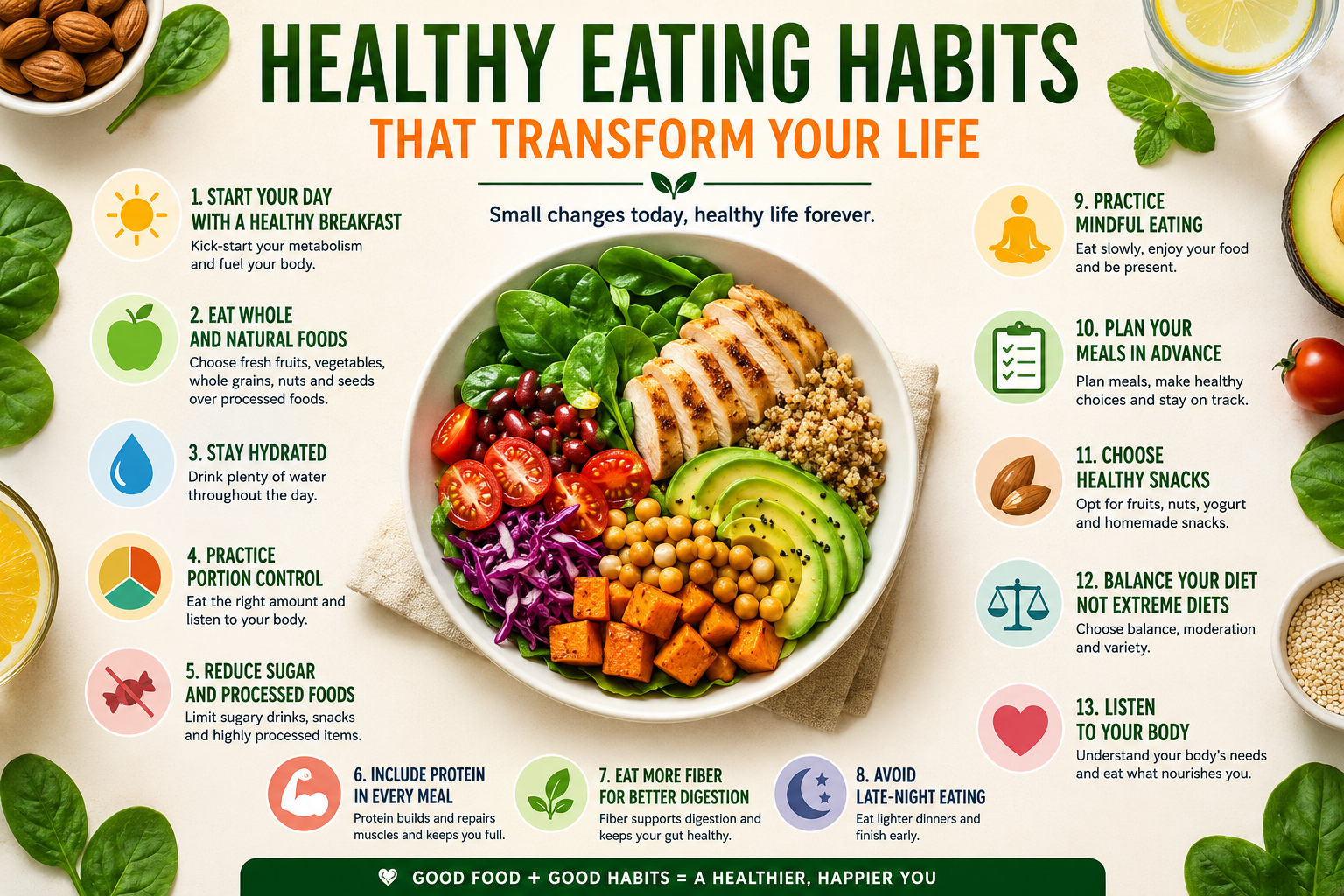
1. Start Your Day with a Nutritious Breakfast
Breakfast is the first fuel your body receives after a long night of fasting. A healthy breakfast boosts metabolism, improves concentration, and provides energy for the day ahead.
Healthy Breakfast Ideas
- Oatmeal with fruits and nuts
- Whole grain toast with peanut butter
- Idli with sambar
- Smoothies with bananas, spinach, and seeds
- Boiled eggs with vegetables
Benefits
- Better energy levels
- Improved focus and productivity
- Reduced unhealthy cravings later in the day
Skipping breakfast often leads to overeating and low energy throughout the day.
2. Eat More Natural and Whole Foods
Whole foods are foods that are minimally processed and rich in nutrients. They provide vitamins, minerals, fiber, and antioxidants that support overall health.
Include More:
- Fresh fruits
- Green leafy vegetables
- Whole grains
- Nuts and seeds
- Lentils and legumes
- Fresh dairy products
Avoid Excess:
- Packaged snacks
- Sugary drinks
- Deep-fried foods
- Artificial preservatives
- Highly processed meals
Choosing natural foods helps improve digestion, immunity, and long-term wellness.
3. Stay Hydrated Throughout the Day
Water is essential for every function in the body. Proper hydration supports digestion, circulation, skin health, and brain function.
Tips to Stay Hydrated
- Drink water immediately after waking up
- Carry a reusable water bottle
- Add lemon or mint for flavor
- Drink herbal teas
- Eat water-rich fruits like watermelon and cucumber
Benefits
- Better skin glow
- Increased energy
- Improved digestion
- Reduced headaches and fatigue
Try to drink at least 2–3 liters of water daily depending on your activity level and climate.
4. Practice Portion Control
Eating healthy foods is important, but eating the right quantity matters too. Overeating can lead to weight gain and digestive discomfort.
Simple Portion Control Tips
- Use smaller plates
- Eat slowly and mindfully
- Stop eating when you feel satisfied
- Avoid eating directly from packets
- Include balanced portions of protein, carbs, and vegetables
Mindful eating helps you enjoy food while preventing unnecessary calorie intake.
5. Reduce Sugar and Processed Foods
Excess sugar and processed foods can negatively affect your health. They often contain empty calories, unhealthy fats, and artificial ingredients.
Common High-Sugar Foods
- Soft drinks
- Packaged juices
- Cakes and pastries
- Candy and chocolates
- Sweet breakfast cereals
Healthy Alternatives
- Fresh fruits
- Honey in moderation
- Dates and dry fruits
- Homemade snacks
Reducing sugar intake can improve energy, skin health, and weight management.
6. Include Protein in Every Meal
Protein is essential for muscle repair, energy, and overall body function. It also helps you stay full longer.
Healthy Protein Sources
- Eggs
- Lentils
- Paneer
- Yogurt
- Fish and chicken
- Nuts and seeds
- Beans and chickpeas
Benefits
- Supports muscle health
- Reduces hunger cravings
- Helps maintain healthy weight
A balanced diet should include protein in breakfast, lunch, and dinner.
7. Eat More Fiber for Better Digestion
Fiber supports gut health and improves digestion. It also helps control blood sugar and cholesterol levels.
Fiber-Rich Foods
- Fruits
- Vegetables
- Whole grains
- Brown rice
- Oats
- Flaxseeds
Benefits
- Better digestion
- Reduced constipation
- Improved heart health
- Longer feeling of fullness
Adding more fiber gradually can greatly improve digestive wellness.
8. Avoid Late-Night Eating
Eating heavy meals late at night can disturb digestion and sleep quality.
Healthy Evening Habits
- Finish dinner 2–3 hours before sleep
- Eat lighter dinners
- Avoid sugary desserts late at night
- Drink warm herbal tea if hungry
Good meal timing supports metabolism and restful sleep.
9. Practice Mindful Eating
Mindful eating means paying attention to your food and eating experience.
How to Eat Mindfully
- Avoid mobile phones or TV while eating
- Chew food properly
- Appreciate flavors and textures
- Listen to hunger and fullness signals
Mindful eating helps improve digestion and prevents emotional overeating.
10. Plan Your Meals in Advance
Meal planning reduces unhealthy food choices and saves time.
Benefits of Meal Planning
- Better nutrition balance
- Less junk food consumption
- Saves money
- Reduces stress during busy days
Easy Meal Planning Tips
- Prepare weekly grocery lists
- Cook healthy snacks in advance
- Keep fruits easily accessible
- Store homemade meals properly
Consistency is easier when healthy food is always available.
11. Choose Healthy Snacks
Snacking can either improve or damage your health depending on your choices.
Healthy Snack Ideas
- Fruit bowls
- Roasted nuts
- Yogurt with seeds
- Sprouts salad
- Homemade smoothies
Avoid
- Chips
- Fried snacks
- Sugary biscuits
- Processed fast food
Healthy snacks provide steady energy and prevent overeating during meals.
12.Balance Your Diet Instead of Following Extreme Diets
Extreme dieting often leads to temporary results and nutritional deficiencies.
Focus On:
- Balanced nutrition
- Long-term habits
- Moderation
- Variety in meals
A sustainable lifestyle always works better than restrictive eating patterns.
13. Listen to Your Body
Every person’s nutritional needs are different. Pay attention to how foods make you feel.
Signs of Healthy Eating
- Consistent energy
- Better sleep
- Improved digestion
- Clearer skin
- Positive mood
Healthy eating is about nourishing your body rather than following trends.
Conclusion
Healthy eating habits are powerful tools that can transform your life physically, mentally, and emotionally. Small daily improvements can create long-lasting results over time. You do not need perfection — consistency matters more.
Start with simple steps:
- Drink more water
- Eat fresh foods
- Reduce processed meals
- Practice mindful eating
- Stay consistent
Your body reflects the care you give it. By choosing healthier eating habits today, you invest in a stronger, happier, and healthier future.
Final Thoughts
A healthy lifestyle begins with mindful food choices. When you nourish your body with wholesome foods and balanced nutrition, you naturally improve your energy, confidence, and overall well-being.
Remember:
Healthy eating is not a short-term diet — it is a lifelong act of self-care.